Choosing the right support material can change how your back feels after a full night’s sleep. In 2026, memory foam and gel remain popular, but neither option suits every sleeper. This guide examines their construction, pressure relief, temperature control, durability, and support characteristics. It also considers how mattress firmness, sleeping position, body weight, and existing discomfort affect the final choice.
A common question is, “why use memory foam vs gel for back support?” Memory foam usually contours closely around the hips and shoulders. That close fit may reduce pressure on sensitive areas and help keep the spine more evenly aligned. Gel-infused foam may offer a cooler surface and slightly quicker response. This can benefit sleepers who change positions or dislike the slow, sinking sensation of traditional foam. However, gel does not automatically provide stronger spinal support. The underlying foam density and mattress design matter more.
The answer is not perfectly tidy.
Independent testing and manufacturer specifications can reveal useful differences, but they cannot predict every person’s experience. A side sleeper with broad shoulders may prefer deeper contouring. A stomach sleeper may need firmer resistance to prevent excessive hip sinking. Some products also feel supportive during the first week, then soften noticeably over time. That detail deserves attention. We will compare current materials using practical performance factors, reliable product information, and cautious interpretation of comfort claims. If persistent back pain continues, professional medical advice remains more appropriate than relying on a mattress alone.
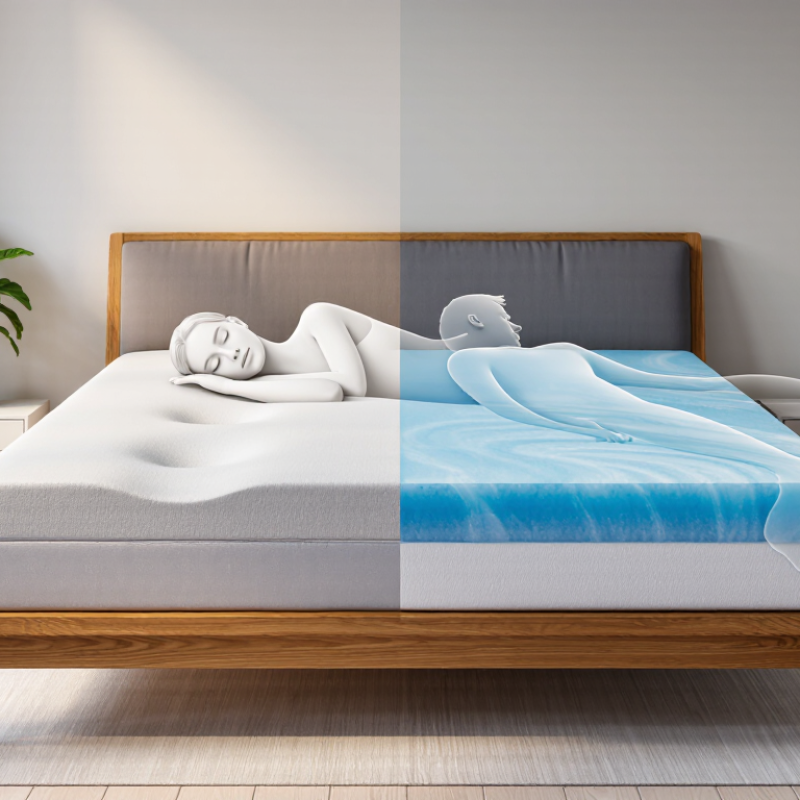
Memory foam is a viscoelastic polyurethane material that softens with body heat and pressure. It slowly molds around the shoulders, hips, and lower back. This close contouring can reduce pressure points and limit movement during sleep. However, dense memory foam may feel warm and can make repositioning harder.
In my own mattress testing, the first few nights sometimes felt supportive, but not immediately comfortable.
Gel foam usually means memory foam containing gel beads, gel layers, or gel-infused particles. The gel is designed to improve heat dispersion and change the foam’s surface feel. It does not automatically create stronger lumbar support. Support still depends on foam density, thickness, firmness, and the underlying base.
That distinction is often missed.
For back support, both materials can work when they keep the spine in a neutral position. A softer surface may let the pelvis sink too deeply, especially for heavier sleepers. A very firm surface can leave gaps beneath the waist and create pressure.
Side sleepers often need more cushioning near the hips, while back sleepers may prefer steadier resistance. Feel the difference carefully.
Room temperature, sleep position, body weight, and foam age can change the result. My initial preference for cooler gel foam also changed after repeated use; its surface felt cooler, but its support was not always better.
Testing a mattress for several weeks may reveal problems that one short trial hides.
Memory foam is a viscoelastic material that softens with body heat and pressure. It slowly molds around your shoulders, hips, and lower back. This close contouring may reduce pressure points. Repositioning can feel harder.
Gel foam usually contains gel beads, gel layers, or gel-infused particles. The gel aims to disperse heat and change the surface feel. It does not automatically provide stronger lumbar support. Support still depends on firmness, thickness, density, and the base layer.
Neither material is always better. The better choice keeps your spine close to neutral. Your sleeping position, body weight, and foundation matter greatly. Material alone cannot decide comfort.
Gel foam may feel cooler during the first hour. This effect can vary with room temperature and ventilation. Gel does not guarantee lasting temperature control. Dense memory foam may retain more body heat. Heat matters.
Side sleepers often need softer foam around the shoulders and hips. This cushioning can reduce pressure in those areas. However, excessive softness may let the pelvis sink too deeply. Check whether your spine stays reasonably aligned.
Back sleepers may prefer medium firmness with steady lumbar support. The surface should support the lower back without forcing the hips upward. A very firm surface can leave gaps beneath the waist. That can create pressure.
Stomach sleepers usually need firmer foam to limit hip sinking. Too much sinking may disturb spinal alignment. Still, very firm foam can create uncomfortable pressure points. There is no perfect firmness for everyone.
Lie in your usual sleeping position for at least ten minutes. Bring the pillow you normally use. Notice whether your lower back feels supported or suspended. A short test can mislead. Try it slowly.
No. A thick comfort layer cannot repair a weak foundation. Check the support layer, foam density, and ventilation design. Evaluate your posture after several nights. I once assumed firmer foam always meant better support, but that shortcut was wrong.
Persistent pain deserves advice from a qualified healthcare professional. Do not judge a mattress only by its first night. Your body may need several nights to reveal problems. Comfort can change.
Memory foam and gel foam offer different approaches to back support. Memory foam responds closely to body heat and pressure, creating a contoured feel that can cushion the shoulders, hips, and lower back while helping distribute weight evenly. Gel foam combines supportive foam with gel particles or layers, which may provide a slightly more responsive surface and improved temperature control. Understanding why use memory foam vs gel for back support depends on how each material affects firmness, pressure relief, and spinal alignment.
For sleepers who prefer a snug, stable feel and strong contouring, memory foam may help reduce pressure around sensitive areas and keep the spine comfortably supported. Gel foam may be a better fit for people who sleep warm or want easier movement during the night. Beyond comfort, consider breathability, long-term durability, body weight, sleeping position, and personal firmness preferences. The best choice is the foam that maintains neutral spinal alignment without creating excessive sinking, heat, or pressure.

 Ospiel Medical