How to Use a Cervical Traction Device at Home?

Time:2026-09-19 Author:Madeline
0%

Learning how to use a cervical traction device at home requires more than following a few quick steps. Cervical traction gently stretches the neck and may relieve pressure, stiffness, or muscle tension for some people. However, it is not suitable for every condition. A diagnosis should guide its use.

This guide explains how to use a cervical traction device at home with practical safety in mind. It covers choosing an appropriate device, checking its fit, positioning your head, and applying gentle traction. You will also learn why gradual adjustments matter. A physical therapist or qualified healthcare professional should confirm that home traction is appropriate for you. Their advice is especially important if you have neck instability, recent injury, numbness, weakness, dizziness, or severe pain.

Small details matter. Your chair should feel stable, your shoulders should remain relaxed, and the support should not press sharply beneath your jaw. Start conservatively. More force is not automatically better. Stop immediately if symptoms increase, spread into an arm, or feel unusual. Seek medical guidance when discomfort persists.

Be cautious.

No general article can replace an individual examination. Even carefully designed instructions may not match your device or medical history. That limitation deserves attention. Read the manufacturer’s directions, inspect the equipment before use, and record how your neck responds afterward. Safe practice depends on patience, accurate information, and the willingness to stop when something feels wrong.
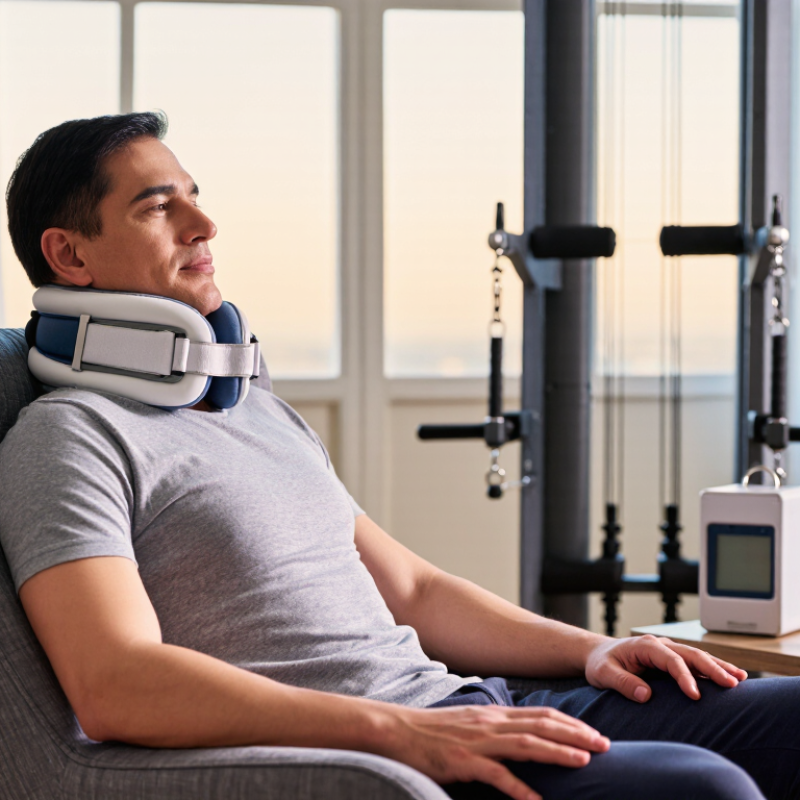
How to Use a Cervical Traction Device at Home?

What Is a Cervical Traction Device and How Does It Work?

A cervical traction device is designed to gently lengthen the neck along its natural axis. It may use a padded harness, an over-door system, or an inflatable support. The device creates a controlled pulling force around the head and neck. This force can reduce pressure on irritated joints or nerve roots for some people. It may also relax tight muscles and improve short-term neck movement.

The effect is usually temporary, not a cure. When traction gently separates the cervical vertebrae, surrounding tissues may experience less compression. However, the response varies widely. Some users feel relief after a brief session, while others notice stiffness, dizziness, or increased pain.

Less can be safer. A physiotherapist or physician should confirm whether traction suits your symptoms, especially after an injury or when arm weakness is present.

At home, keep your neck in a neutral position and follow the device instructions carefully. Begin with the lowest comfortable force and a short session. Do not pull sharply or increase pressure because relief feels slow. Stop immediately if pain spreads, numbness worsens, vision changes, or you feel faint. A common mistake is assuming stronger traction works better. It does not. Check your posture, breathing, and skin comfort during use. Home treatment can feel simple, but correct adjustment matters more than owning an advanced device.

How to Check Whether Home Cervical Traction Is Appropriate

How to Use a Cervical Traction Device at Home?

How to Check Whether Home Cervical Traction Is Appropriate

Home cervical traction is not suitable for every neck problem. A clinician should identify the cause of your pain before you try it. Muscle tension differs from nerve compression, joint instability, or spinal cord involvement. The treatment plan should match the diagnosis.

Avoid home traction after a recent neck injury, fracture, or surgery unless your specialist approves it. Extra caution is needed with osteoporosis, rheumatoid arthritis, infection, cancer, or severe arthritis. It may also be unsafe if you have worsening arm weakness, spreading numbness, poor balance, or bladder changes. Seek urgent medical care for these symptoms. Do not rely on online instructions alone. They can miss important details.

Tips: Ask a qualified healthcare professional to demonstrate the device and confirm the position. Use only the pressure and duration they recommend. Keep your neck relaxed, and check that the strap does not press your throat. Stop immediately if you feel sharp pain, dizziness, nausea, headache, or new tingling. Relief should feel gentle, not forceful. I once assumed “more stretch” meant better treatment; that assumption was wrong. Your response may also change from day to day. Record symptoms before and after each session, then share the pattern with your clinician.

How to Set Up the Device and Position Your Neck Safely

How to Use a Cervical Traction Device at Home?

Before setting up a cervical traction device, get guidance from a qualified healthcare professional. Neck pain can have different causes, and traction is not suitable for everyone. Avoid home use after a recent injury, neck surgery, or when you have severe osteoporosis, spinal instability, or unexplained neurological symptoms. Ask before trying it.

Choose a firm chair and a quiet area with enough space. Read the device instructions carefully, because straps and anchors differ. Check every buckle, hook, and support point before placing your neck. Sit upright with both feet flat. Keep your shoulders relaxed. Your head should face forward, not tilt sharply upward or downward. The chin support should feel secure, never tight. A neutral position matters more than a strong stretch.

Begin with the lowest comfortable setting and a short session. Follow the prescribed time rather than guessing. Breathe normally, and avoid using the device while sleepy or alone if you feel uncertain. Stop immediately if you notice sharp pain, numbness, weakness, dizziness, nausea, vision changes, or a worsening headache. Release the tension slowly. Do not jerk your head away. It is easy to assume that stronger traction works faster, but that assumption can be unsafe. A gentle, controlled stretch is usually easier to monitor. If symptoms remain afterward, contact your healthcare professional before trying again.

How to Use a Cervical Traction Device at Home

Follow this safety-first setup sequence. Traction force, duration, and frequency should only be used as prescribed by a qualified healthcare professional.

Start by checking the device and securing it correctly. Keep your head and neck in a comfortable, neutral position rather than forcing the chin upward or downward. Begin only with clinician-approved settings, and stop immediately if you experience increased neck pain, dizziness, numbness, weakness, headache, vision changes, or other unusual symptoms.

How to Apply Cervical Traction Step by Step

How to Use a Cervical Traction Device at Home?

Before applying cervical traction, obtain guidance from a qualified healthcare professional. Neck pain can have different causes, and traction is not suitable for everyone. Avoid home traction after recent injury, suspected fracture, spinal instability, or unexplained weakness. Extra caution is needed with osteoporosis, inflammatory arthritis, previous neck surgery, or vascular conditions.

Read the device instructions carefully. Sit or lie in the position recommended for your equipment. Keep your shoulders relaxed and your head facing forward. Attach the support without pressing against your throat. Use only the traction force and duration prescribed by your clinician. Start gently. A mild, steady pulling sensation may be expected. Sharp pain is not.

Check your posture in a mirror if possible. The neck should remain aligned, not tilted or twisted. Breathe normally during the session.

Stop immediately if you notice dizziness, nausea, headache, numbness, tingling, vision changes, or increasing pain.

Do not sleep while using the device. Do not increase the force because relief feels slow; that is a common mistake. The first session may feel awkward, and the setup may need adjustment.

If symptoms worsen afterward, record what happened and contact your healthcare professional before trying again. A careful routine matters more than strong traction.

How to Monitor Results and Respond to Warning Signs

Before using a cervical traction device, record your baseline: pain from 0 to 10, neck movement, sleep quality, and any arm tingling. Recheck these measures immediately afterward and again the next morning. A small improvement that lasts several hours may be meaningful, but increased pain is not a treatment goal. A 2020 systematic review in the Journal of Clinical Medicine found possible short-term benefits from cervical traction, yet the evidence quality was low and study samples were limited. That uncertainty matters.

Stop the session immediately if pain travels farther down the arm, numbness increases, grip feels weaker, or symptoms continue after removing the device. Dizziness, faintness, nausea, blurred vision, unusual headache, or difficulty swallowing also require prompt medical advice. Seek urgent care for new walking problems, loss of bladder or bowel control, fever, severe weakness, or symptoms after an injury. The American College of Radiology’s 2024 neck-pain criteria emphasize clinical assessment when neurological symptoms or serious warning signs appear. Do not increase force to chase faster results. My own practical bias is simple: gentle, repeatable sessions are easier to monitor than aggressive stretching. Still, home tracking can miss important findings, so a physiotherapist or physician should review persistent symptoms, especially when pain worsens over several days.

FAQS

What is a cervical traction device?

It gently lengthens the neck along its natural axis. It may use a padded harness, door system, or inflatable support. The pulling force should feel controlled, mild, and steady. It is not a cure.

How might cervical traction help?

Gentle traction may reduce pressure around irritated joints or nerve roots. It can also relax tight muscles and improve short-term neck movement. Results vary widely. Some people feel relief, while others feel stiffer or dizzy.

Is home cervical traction suitable for everyone?

No. A clinician should identify the cause of your neck symptoms first. Muscle tension, nerve compression, instability, and spinal cord problems need different care. Avoid home traction after recent injury, fracture, or surgery without approval. Extra caution is needed with fragile bones, infection, cancer, or severe arthritis.

What warning signs mean I should avoid or stop traction?

Stop immediately if pain spreads farther down your arm. Also stop if numbness increases, grip weakens, or new tingling appears. Dizziness, nausea, faintness, blurred vision, or unusual headaches require prompt advice. New walking problems or bladder changes need urgent medical care.

How should I begin using a cervical traction device?

Ask a qualified healthcare professional to demonstrate the correct position. Keep your neck neutral, relaxed, and supported. Begin with the lowest comfortable force and a short session. Do not pull sharply.

How can I tell whether traction is helping?

Record pain from zero to ten before each session. Note neck movement, sleep quality, and arm tingling. Check again immediately afterward and the next morning. Small relief lasting several hours may matter, but worsening pain is not success.

Should stronger traction produce better results?

No. Stronger pulling may increase pain or irritation. A common assumption is that more stretch works better. That assumption can be wrong. Gentle, repeatable sessions are easier to monitor.

What does current evidence suggest about cervical traction?

Some research suggests short-term benefits for certain neck conditions. However, the evidence remains limited and uncertain. Study groups were often small, and results varied. Home tracking can miss serious findings, so persistent symptoms need clinical review.

Conclusion

This guide explains how to use a cervical traction device at home in a careful, informed manner. It introduces what cervical traction is, how gentle pulling may help reduce pressure and improve neck comfort, and why home use may not be suitable for everyone. Before beginning, users should consider their symptoms, medical history, and any existing neck, spine, nerve, or circulation problems, and seek professional advice when appropriate.

The article also describes how to inspect and set up the device, maintain a neutral neck position, and apply traction gradually according to the instructions. It emphasizes starting with low intensity and short sessions, avoiding sudden movements, and stopping if discomfort increases. Users should monitor changes in pain, numbness, weakness, dizziness, headache, or other warning signs, and seek medical guidance if symptoms persist or worsen. Overall, it offers practical safety principles for how to use a cervical traction device at home responsibly.

Madeline

Madeline

Madeline is a dedicated marketing professional with a wealth of expertise in our company's core offerings. With a keen understanding of the industry, she brings a unique perspective to her role, consistently delivering high-quality content that highlights the superior aspects of our products. As......